

Öst är Öst och Väst är Väst – i alla fall i OS
Category: belarus, eastern europe, guests, russia
Tags: Andrei Arshavin, belarus, doping, eastern europe, evgeni plushenko, olympic games, russia, rysskräck, sport
viewpoint-east.org kan stolt presentera ett nytt bidrag av Maria Nilsson. Nu om fördomar och rysskräck i bland annat (så dagsaktuella) OS-sammanhang.
Vem har sagt att det är enkelt att vara slavist, eller mindre akademiskt uttryckt rysskramare eller öststatsälskare? Det är aldrig tydligare än när det är dags för OS eller annat stort sportevenemang och framför allt i individuella sporter där svenskarna har, eller i alla fall har haft stora framgångar.
Vem som helst kan i allmänhet uppskatta det vackra rörelsemönstret hos en konståkare som Evgenij Plushenko, utsökta dribblingarna av en Andreij Arshavin eller en Elena Isinbajevas (dessutom har hon ju samma manager som Christian Olsson) förmåga att hela tiden slå nya världsrekord men den längdskidåkare eller skidskytt från forna Öst som skidar förbi en Charlotte Kalla eller skjuter bättre än en Helena Jonsson finner aldrig nåd hos den svenska publiken. Finns det någon gång man kan fråga sig om muren överhuvudtaget fallit är det i längdskidspåret eller i skidskyttetävlingar. Aldrig är väl uppdelning mellan öst och väst dvs. ont och gott så tydlig som i dessa avseende.
Uppkrupen i ett hörn i ett stort sällskap mumlar du förklaringar till varför ryska namn är så konstiga och i allmänhet feluttalade av kommentatorer, försöker glatt dra på munnen när sällskapet skämtar kring att Belarusier och Ryssar inte får komma hem om de gör en dålig tävling eller snarare blir förvisade till Sibirien och framför allt anstränger dig för att inte göra det till ett statsvetenskapligt problem när någon poängterar hur mycket bättre det var när Sovjet fanns och det då fanns fem åkare istället för dagens 35.
I händelse av en ”Öststats” seger ställer sig alla kollektivt upp och skriker epo medan du lite försynt förklarar att enbart för att ryska tävlande blivit ertappade som dopade vid fler tillfällen än de allestädes samvetsgranna svenskarna behöver det inte betyda att alla på andra sidan Donau knaprar piller morgon, middag och kväll. Det kan ju faktiskt vara så att tävlande från det som i det här sammanhanget så gärna benämns som forna Öst faktiskt är bättre tränade, bättre på att toppa formen, bättre på att hålla nervositeten stången osv. än sina svenska motsvarigheter.
Alla som någon gång rest i det forna Öst eller har vänner som kommer därifrån vet om den benhårda disciplin som alla barn grillas i oavsett om det handlar om tämligen oskyldiga fritidssysselsättningar eller prestationsinriktade sporter. Det var en av många paradoxer med landet bakom järnridån, alla skulle vara bäst samtidigt som det kollektiva alltid skulle segra över det individuella. Alla som någon gång har befunnit sig i en träningshall i Öst under vintern vet också om den skoningslösa kylan, avsaknaden av varmvatten i duscharna och möglet i omklädningsrummet vilket antagligen är mer karaktärsdanande än de svenska motsvarigheterna. Till dess att jag blir motbevisad av dopingkontroller kommer jag därför att fortsätta glädjas i smyg i mitt soffhörn vid en ”Öststatsseger”.
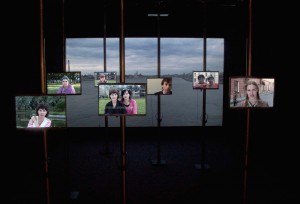 State of Mind consolidates to a trilogy together with Resonance and Code of Silence. In different ways these lens-based art installations cast light on aspects of socially and culturally constructed identity-based groups in contemporary society. Photography and video are used in combination to expand on the separate histories of the two media with regard to interviews and portraits in documentary genres. This is the point of departure for all three installations. As for the overall narrative, the topics of how and why different groupings construct networks and communities in order to achieve a sense of belonging are in focus, as well as the conditions and necessities for forming the community. The projects look at the social conventions family, love and career, dealing with power relations such as gender, ethnicity, sexual orientation and class. The method of collecting the material in fieldwork is similar in the three projects, but the questions asked and issues raised are specific to each segment of the installations. Portraiture and personally based stories are central. The trilogy is presented as three separate art installations, which co-exist and cross-inform each other. They reflect upon civil rights issues and the idea of being safe and productive within society, working in the space between personal choice and social expectations. Memory, narration, visual representation and oral history are central. In each of the three works a different group is approached that relates to the artists’ personal lives. Resonance [Resonance was exhibited at Norrköping Art Museum, Göteborgs Konsthall and Uppsala Museum of Art during 2006-2007.], our first collaboration, is based on a network of peers belonging to a successful generation of artists and curators. They are all women who made an entrance onto the Swedish and Danish art scene in the 1990´s, and now have international careers. On one level Resonance is an examination of the Scandinavian welfare state, and in more specific terms, the impact of the conditions it creates for the portrayed women to make it on the art scene. In Code of Silence [Code of Silence will be ready to be launched in 2009.] this is a sibling group of five who grew up on a small farm in rural Gothenburg, Sweden. The farm had to face the challenge of major cultural reforms in the nineteenth century, but remained intact. It became a target for expropriation during the 1950´s and 70´s to make way for the reforms involved in building the modern Sweden. Hence, it remained an object of possible interest for the national cultural heritage. The farm was finally demolished in 2004. Code of Silence is based on oral history, memories told by the siblings infringing the UN’s Declaration of Human Rights paragraph 17 relating to everyone’s right to a home. In addition this installation includes a large number of private and official documents such as hand-written wills, receipts from selling milk, and letters to the King of Sweden. State of Mind explores everyday life and the boundaries between ethics, legislation, prejudice and civic expectations in the LGBTQ [Lesbian, Gay, Bisexual, Transsexual, Queer] life of St. Petersburg, Russia. It emphasizes individuals identifying as lesbians or bisexual women.