• The Russian-Chechen conflict: Factors that triggered the conflict to become an armed conflict in 1994-1996 and then again in 1999 (Part I)

    The Russian-Chechen conflict: Factors that triggered the conflict to become an armed conflict in 1994-1996 and then again in 1999 (Part I)

    Publicerad:

    Läsningstid: 5 minuter

    With help from Anders T Carlsson viewpoint-east.org has the possibility to investigate factors for the Russian-Chechen conflict. Anders T Carlsson is a project manager with a lot of experience from culture exchange projects in Georgia. He has also worked in Russia a few months. At the moment he works as Programme Coordinator for the Göteborgs Dans & Teater Festival.

    This text focuses on the Russian-Chechen conflict and suggests what factors that triggered the conflict to become war in 1994-1996 and then again in 1999-2008. An analytical model, by Michael E. Brown, that has gathered a set of underlying and proximate causes of internal conflict has been used as the analytical tool.

    This article is divided into two parts and Part II will be publish tomorrow.

    Part I

    What makes a conflict become an internal war?
    You have probably heard the story before as Michael E. Brown tells it: – in a weak state a risk complex is created by irresponsible leaders driven by intensifying elite competition in a context with different ethnic groups with problematic historic relationships and economic problems. In such a context a rapid change in any important field increases the risk that the conflicts in the area escalates into war. What finally start the war, due to Brown and the instrumentalist perception, are decisions taken by political leaders. Sometimes though mass-triggered riots is the triggering cause. But that is much more rare.

    In this text we are reading the Russian – Chechen conflict with the two analytic tools provided by Michael E. Brown: they are a list of underlying causes that can turn into triggering (proximate) causes just by the changes being rapid. The factors are structural, political, economic, social and conceptual. Brown also urges us to analyse if the conflict is internally or externally driven and in both cases by whom – the elite or the masses.

    Conflicts are extremely complex and when they have emerged into killings they become horrible and extremely hard to solve. As a help to keep the balance and hope it is essential to remember that most internal conflicts do not escalate into war. In Post-Soviet Russia for example the conflicts in Tatarstan and Baskortostan was solved by negotiations. Why that not happen in Chechnya can be understood by reading this text.

    How come that people in a conflict area that are pushed into war by their leaders are prepared to participate in and perform the horrors of war? Browns model does not explain the psychological aspects that make internal war possible. The scholar Stuart J. Kaufman investigates and explains this. His work gives us a good complement for our understanding and for what actions that could be taken to prevent war. Even though this text is limited to analyse the Russian-Chechen conflict using Browns analytical model the work of Kaufman is important even though it is not present in this text.

    Just a short historical background before we continue. Since Tsarist Russia invaded Chechnya there has been a persistent resistance and almost permanent warfare from 1783 to 1943. In 1943 the Chechens were mass deported to Siberia and Central Asia or killed on the spot if it was to difficult to move them. The Chechens were able to return after the death of Stalin. The experiences and memories of hundreds of years of war and the horrors of the deportation that killed a third of the Chechen population sets the historical and psychological background for the two wars that were fought from December 1994 to august 1996 and then 1999-2006. The two latest wars killed over 100 000 Chechens – about 10% of the population at that time.


    Photo from Georgia, near the Chechen border. Thank for photo from cinto2.

    Proximate Causes for the Russian – Chechen wars 1994-1996 and 1999-2008

    Structural Factors that triggered the conflict to war
    Michael E Brown argues that rapid changes transform permissive causes to proximate (triggering) causes. In the case of the Russian-Chechen conflict the collapsing state is the most important structural factor. When the Soviet Union collapsed in 1991 Russia became an independent state. In Chechnya the communist leader Doku Zavgayev was overthrown and Dzhokhar Dudayev won a presidential poll and proclaimed Chechnya independent of Russia. The unilateral proclamation of independence was only recognized by Afghanistan.

    The new Russian state was weak. It took over a bankrupt entity with a bad infrastructure tormented by merciless inner strife for power and economical gains. The parliament blocked the possibility for the president to start a war in Chechnya. When Yeltsin had won the struggles for power and was supported by a new constitution with a strong presidential power he choose to invade Chechnya in December 1994.

    The Caucasus area has a significant importance in the military agenda of Russia since the 18th century. The collapse of the Soviet Union was a major military-strategic set back for Russia on its southern border against Iran and Turkey. It also created a new threat against the Russian dominance in the area when the military equipment of the Soviet Union was confiscated and used by the Chechens to establish military capacity to protect the contested territory. The three newly independent states in Southern Caucasus and the situation that Chechnya was left to govern itself between 1991 and 1994 changed the intra-state and international military balances drastically in the Caucasus region. The Russian political agenda has been very clear since 1994. Restore dominance. The war in Chechnya was also a result of this agenda.

    Another proximate cause that Brown presents is changing demographic patterns. When Chechnya declared independence the vast majority of the Russian population left. The Russians were to a large extent skilled labour like doctors, engineers and teachers. This increased the economical crisis in both a short and long term perspective and was part of the destabilisation process.

    Tomorrow you can read Part II of this article. Anders will then continue to highlight Political factors, Economical and Social factors and also Conceptual and Perceptual factors that triggers the conflict of war and his finial conclusions.
  • S:t Petersburg 1995/2010

    Publicerad:

    Läsningstid: 2 minuter

    viewpoint-east.org proudly presents a brand new element – online virtual gallery with a different viewpoint.

    First one out is Maria Magnusson.

    Maria grow up at a farm at the Swedish country side, in a small village called Norra Björke. She has BA and MA in Photography at The University of Gothenburg, Sweden and a BA of Arts in History and Theory of Art also at The University of Gothenburg.

    Maria is working as a photographer and occasionally as DJ and has been engaged on special projects at Stockholm City Museum. In October 2009 she participated in the 12th Annual Antimatter Film Festival, Canada, with the art video Bliss out. She was also a warm-up DJ to Jan St Werner (Mouse on Mars) at Riche, Stockholm, October 2009.

    This is Maria’s words about the pictures:

    S:t Petersburg 1995/2010

    It has been 15 years since I looked at these pictures. They were photographed in spring 1995. It was my first trip to S:t Petersburg, Russia.

    I went there with my friend Oleg Bogdanov who is a Sociologist and was
    born in the city. He did a work about young people living in S:t Petersburg and I took portraits of the interviewee.

    At first glance, it strikes me that these pictures looks contemporary. Like they could have being taken today. The clothes and hairdos are highly in fashion now. Time aspect is playing a trick. The time spinning around like
    a lottery wheel and has stopped at 2010, when nostalgia for the 80’s in fashion, music and ideas are at it’s peak.

    Looking at these portraits again I see the innocence of youth ready to
    make steps through adolescence.

    What are they doing today I wonder?


  • Alexander Lukashenko loves Sweden

    Alexander Lukashenko loves Sweden

    Publicerad:

    Läsningstid: 2 minuter

    Alexander Lukashenko has a political reputation that few wants to be confused with, and one can think that also Swedish politicians would try to avoid being confused with his ideas of running a country. But unwillingly the Swedish government has got a new fan, and perhaps a fan they never wanted to have, and that is, again, Alexander Lukashenko.


    Alexander Lukashenko from wiki

    Recently the Swedish Minister of Justice, Beatrice Ask, got a request from Alexander Lukashenko, where he asks her to start an exchange project, where Belarus government can learn more about how to reduce economic crime on Internet. I am however sure that this is not Alexander Lukashenko real intentions. Sweden did more than a year introduce the FRA law, that actually gives a certain department the right to track and read all emails and sms’ that crosses the border. The idea is to try to track down terrorists, which of course is complete nonsense. Sweden has a long tradition of tracking its own citizens. (It is no wonder we are the land of accurate statistics on all the moves the citizens takes.) Many in the Swedish piracy movement interpets this as a new way to violate human rights in Sweden (and other countries), and also because FRA can sell the information to anybody they want to!

    I am pretty sure Alexander Lukashenko understand how the Swedish government can use all the information they track from the email and sms’ that crosses the border. (To be clear: all emails in Sweden cross the borders. Servers have a very unpatriotic style and don’t really care which server it communicates with, inside or outside Sweden, the server never care.)

    It is however very easy for me to be ironic, sitting here in a country with freedom of speech, but I am really worried that this interest of Alexander Lukashenko in Internet, is more and more threatening all activity on Internet in Belarus. And outside the borders! I think it is high time that we, the blogging swarm that wants to help the citizens of Belarus to get freedom of speech and a free internet, to speaks up! At least I will do all in my power to try to high light all this crimes against human rights!


  • If he hits you he loves you

    If he hits you he loves you

    Publicerad:

    Läsningstid: 4 minuter

    On International Women’s Day viewpoint-east.org focus in an very important question concerning gender equality and human rights! The essay is written by Maria Nilsson, that has written two other articles on viewpoint-east.org before, read them here or here.

    I was in the beginning of my twenties and this was only my second visit to the countries called the former Soviet Union. My first visit to Ukraine had resulted in an instant love with everything from the people to the Soviet architecture so when I was admitted to a summer course hosted by a Swedish agency I was more than pleased. Sitting in the, despite the summer temperature outside, cold classroom and listening to a lady with the title Head of the Social Department in the city, I was a little bit less pleased and a little bit more annoyed.

    To start with not by the lecture but by my fellow Swedish “classmates” behaviour the last few days. I was the youngest in this course and by everyone’s standards by far the most boring. It appeared that this course was nothing but an opportunity for middle aged (and probably middle life crizing) Swedes to excess in cheap vodka drinking and flirtations. The dead serious “20-something Russian language student” was not their idea of a fun crowd. Therefore my attention was not directed to the comparatively ordinary very Russian looking woman giving the lecture until she uttered the sentence that I will never forget and that has come to follow me in life “If he hits you he loves you”.


    photo: sophie engström
    Kyiv, Podil, Feb 2010

    As I remember it the lady made this remark upon a question from the audience on how the authorities is battling the high instances of domestic abuse in this country. At that time I was not fluent in Russian and had to wait for the translator until the full meaning of this remark came over me. “If he hits you he loves you”. If this was the official view on the domestic violence I will never know, but as I have come to travel to and live more in the former Soviet union I have realized that domestic violence is not something you address openly at any level.

    Several years later, and following the knowledge of working in a women’s rights organisation for a few years, I now strongly believe in the notion of gender based violence being sedimented in the same structures regardless of its occurrence in the middle class Swedish family, the illiterate couple in Africa, a family from Middle East or somewhere in the former Soviet union. It is a question of power and the fact that women are considered by societal structures to be subordinate men. Hence the way in which this problem is addressed by society is determining the ability of preventive measures and support system of the abused women. If society in general shares the idea of “if he hits you he loves you” then there is indication that the problem of domestic violence is considered to be exactly a domestic problem, where the authorities have no mandate to interfere and problems occurring in this sphere should also be resolved within the private walls of the home.

    Travelling and living in the former Soviet Union I have come to realise two things; there are very few women’s shelter outside of the big cities and secondly, many women blame themselves for being abused as well consider the husband or boyfriend to be the “real” victim. In example “I did not make him proper supper”, “He can’t handle not having a job”, although the latter is not different comparing to other contexts.

    I have met women behind the phrase “if the hits you he loves you” and I don’t think that Elena after being repeatedly abused by her alcoholic husband and after which he in a drunken moment threw her little girl off the balcony, would ever consider this phrase to be correct. Her bruises both inside and outside will never permanently go away. The husband was not even sentence to jail. Elena herself did not believe that she deserved anything else and found herself in yet another abusive relationship believing that her life was over long before it should be

    Discussing gender in development cooperation and foreign relations is often about gender mainstreaming and so called gender perspective. The question is if this is enough? More attention must be paid to domestic violence and start treating it as it is – a violation against human rights.


  • One-year anniversary of Ukraine’s first Gender museum

    One-year anniversary of Ukraine’s first Gender museum

    Publicerad:

    Läsningstid: 5 minuter

    Today, 3 of March, it is one year since the first Museum of women’s history,
    history of women’s and gender movement in Ukraine
    opened. I wanted to highlight this and asked the museum’s guiding star and director Tetiana Isaieva a couple of questions.

    gmuseum

    How did it all start?
    The idea to create the museum emerged in 2006, after a group of Ukrainian journalists had visited Sweden with the Gender Program «Olga&Oleg», (this project was supported by SIDA). The group studied gender situation and gender equality in Sweden. The visit resulted in a first exhibition and we began to look for new ones. In 2006 we was not sure we could realize our idea about a museum. It just didn’t feel realistic, but we started to search for other gender museums in Europe and around the world. We investigated how other museums worked and what kind of projects they implement.

    We have many who support our idea, and also some financially. Olena Suslova, Gender coordinator at the Ukrainian parlament, supported our idea and initiated to put the first brick. We got 100 UA (Ukrainian grivnes which is little bit more than 10 €). We understood that we could not make any exhibition from that contribution alone, but it was a responsibility, a start!
    Also The Program “Equal Opportunities and Women’s Rights in Ukraine” supported our project and provided an opportunity to present our project to a larger audience in September 2008, within the Project «Exhibition of gender ideas and projects». In 2008 we could show our colleagues our collection of pictures.

    In March 2008 our project was supported by the Global Fund for Women. Global Fund for women is one of the funds which support women’s initiatives around the world. And our first exhibition was presented in Kharkiv, on the 3d of March 2009 in Kharkiv national university within the Study Program for the directors of the gender resource and study centers in different regions of Ukraine.

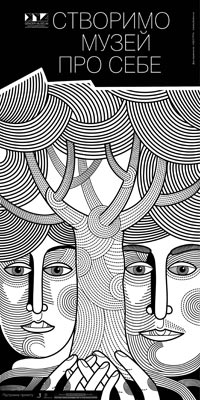
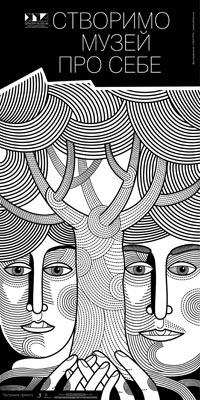
    Larisa Kobelanska – the Head of the Program “Equal Opportunities and Women’s Rights in Ukraine”, also assisted us to come up with the name for our project name: «Let’s create a Museum about us!».

    Could you describe your activities?
    We gather information about women and men, gender theories and practice, which shows ideas of gender in Ukrainian society. There are many different points of view on roles of women and men in our society of course. The traditional roles for women are mothers and wives, keeper of family. But I am sure that in in many years from now these roles may have changed a lot. One important question for us is that women have to have equal rights and possibilities in all spheres of life. During 2009 we created four panoramas of social feminine and masculine roles and twelve new exhibitions. For exemple, the history of women’s, feminist and gender movement, domestic violence, masculine problems. These and many other exhibitions will be exhibited at our museum. We will also tell about female solidarity and women’s and gender movements. We want to show that gender problems are not only problems for women but the problems of the whole society. One of the exhibitions is devoted to «Stop sexism!». We hope that in a few years we will be able to see sexist advertisements only at the gender museum.

    What do you exhibit at you museum? How does it work?
    Our collection consists of more than 350 items, such as pictures, study books, films, interviews, CDs and DVDs, different documents, souvenirs, children toys and books, the post cards and envelopes, household goods, such as “easy labor of women”, and even personal things from gender activists. We have some art projects too, «Gender in pictures», «Women’s face of Ukraine», «Fеmіnіsm is…», «Gender in children eyes», «Children against violence».

    Ukraine has chosen the course to the democratic changes and we are looking for our own way to solve the gender equality. The «Law of Ukraine of equal rights and possibilities for women and men» (2005) and Government Program of gender equality (2006) are items at our museum. The government are implementing gender perspective in Ukraine but changes are rather slow. Nevertheless stereotyped ideas about social feminine and masculine roles continue to remain in society consciousness. Even in new books you can see stereotyped pictures of women and men.

    We also tries to gather items about gender situation, about women’s movement in different countries. We are extremely grateful to our friends from Germany, Georgia, Sweden, USA, Italy, Lithuania, Korea and Vietnam.
    We have created an Internet portal. And it is one of the most powerful Internet gender resources in Ukraine. We have a virtual version of our museum and a Gender Channel. Here we gather films, video materials, interviews and other pieces of information concerning.

    What is your hopes and wishes for the future?
    We are looking for new items to exhibit and conduct PR and fundraising campaigns for our project. We hope that the creation of the museum will increase the cultural connections between Ukraine and other countries, it will consolidate the women’s movement, attract journalists attention and the whole society towards gender issues.

    In April 2009 we visited Frauenmuseum Bonn. We were invited to participate in the second International Congress of women’s museums and to get in touch with representatives from women’s museums in different countries. In September we presented our project at the Congress in Bonn and since then our museum is the member of the network of International women’s museums.

    In autumn 2009 we prepared two exhibitions, devoted International action “16 days against gender violence” (2009, November) and exhibition “White on white”, devoted to International day of solidarity of women and unknown pages of women’s history of Ukraine (2010, March).

    We are writing our own history, and also rewriting history as it has been perceived. Our society has to travel long until we reach a situation where women’s right are fully respected, but this is a start. We also think it is very important to show young generations how ideas about stereotypes are realized in our society and we hope to be able to create a consciousness about this through or exhibitions.

    And last I would like to make an invitation: The First Gender Museum in Ukraine invites everyone for cooperation and interaction! And please, pass this information to your colleagues and partners! Become a participant of the project «Let us create a Museum about us!».


Archives: