• The Russian-Chechen conflict: Factors that triggered the conflict to become an armed conflict in 1994-1996 and then again in 1999 (Part II)

    The Russian-Chechen conflict: Factors that triggered the conflict to become an armed conflict in 1994-1996 and then again in 1999 (Part II)

    Publicerad:

    Läsningstid: 7 minuter

    We continue today with Part II of Anders T Carlsson’s essay “The Russian-Chechen conflict: Factors that triggered the conflict to become an armed conflict in 1994-1996 and then again in 1999”. Don’t forget to read Part I.

    Political Factors that triggered the conflict to war
    Political transitions is a triggering cause in the Russian-Chechen conflict. The Chechen decision to declare independence was taken by Dzhokhar Dudayev after being elected president in 1991. The Russian state had no intention to recognize this unilateral declaration. These two positions constitute the conflict over the Chechen territory.

    The decision to start war in Chechnya in 1994 was taken by the Russian president Boris Yeltsin. In 1999 it was taken by the prime minister Vladimir Putin. These historic facts support the theory that political decisions most often are the proximate (triggering) causes for war. It is also important to state that the decisions by the leaders were taken due to underlying political (the urge to stay in power), economic and military-strategic factors.

    From the Chechen declaration of independence in 1991 Dzhokhar Dudayev and Boris Yeltsin had a long and hostile arguing, both attacking and insulting each other. This increased the hostile situation. The personal antagonism and inability to raise above this is in my sources said to be the reason for why the conflict could not be solved by negotiations like it had been done in Tatarstan and Bashkortostan.

    In 1994 the ultra nationalist leader Zjirinovskij´s party had won 25% of the seats in the Duma – the Russian parliament. Yeltsin is said to have had ideas of a ”short successful war” to improve his popularity among the nationalists to be able to secure his power in the next presidential election. Intensifying leadership struggles is an important triggering cause explaining why the invasion of Chechnya was launched in December 1994. By the time for the campaign for the 1996 presidential elections the war was a heavy weight on the shoulders of president Yeltsin who gave order to negotiate a ceasefire. As a result the Russian troops left Chechnya but it was only a tactical and temporary withdrawal.


    View of a gorge in the Caucasus Mountains in Chechnya.
    Early color photograph from Russia, created by Sergei Mikhailovich Prokudin-Gorskii as part of his work to document the Russian Empire from 1909 to 1915.
    Photo from wiki.

    During the summer of 1999 Chechen fighters went into Dagestan proclaiming to fight for the establishment of a joint Muslim state in Northern Caucasus. As a response Yeltsin fired the Russian prime minister Sergej Stepasjin and replaced him with the head of the internal security forces (FSB) Vladimir Putin. Putin declared that Chechnya was going to be subdued with violence and launched a new military offensive. This second war was supported by controlled reports in Russian national media and made Putin widely popular within Russia. When Yeltsin declared his resignation at New Years Eve 1999 he appointed Putin as his successor. This shows how political transitions and agendas has significant influence on conflicts.

    In March 2003 a criticized election on a new Chechen constitution took place and in October the by Putin proposed candidate Ahmed Kadyrov was elected president. From this on Moscow have appointed new president candidates when the former have been killed. The present Chechen president Ramzan Kadyrov, that was elected in what has been called a charade election in 2007 has set up a strong militia “the Kadyrovtsy” to wipe out all sessessionists and revenge the killing of his father – who was assassinated.while being president of Chechnya. Ramzan Kadyrov is the head of the pro-Putin United Russia party that rules Chechnya today. The rule of Kadyrov has made the eliminating of the “separatists” a local pro Russian Chechen issue. Human Right Organisations condemns the methods used by the Kadyrovtsy. In April 2009 it was announced from Kreml that the military operation was ended as a result of the improved situation in Chechnya. This has also lead to growing inter-group competition and violence.

    Ultra nationalistic and fascistic movements has grew to such extent in Russia that it is regarded as dangerous for people with ethnic background in the Caucasus or Central Asia to live in Russia. They are targets for violence, extortion and some times even murder. The prevailing racism in Russia is part of an influential exclusionary nationalistic ideology that is also used by Vladimir Putin for his own purposes. The racist perception of Chechen and other Caucasian people makes it possible to wage extreme violence and war on these populations. This shows that increasingly influential exclusionary ideologies is part of the explanation what makes internal war possible.

    Economic and social factors that triggered the conflict to war
    Before the wars Chechnya was a transit country for oil and gas pipelines from the oil rich Caspian Sea region to the Black Sea Cost. It was also a country with own but fading oil reserves. It was of economic and strategic significance for Russia to control the area mostly for the sake of the pipelines.

    As a result of the first war the infrastructure in Chechnya was destroyed and due to the isolation from the world and the Russian politics the infrastructure was not rebuilt. It was extremely hard to make an income and as a result violence and criminal actions like kidnappings and theft increased and spilled over into neighbouring states. This further isolated Chechnya and made the situation even worse. These mounting economic problems is also an explanation of what triggered the war.


    Map of Chechnya. From wiki.

    Conceptual and perceptual factors that triggered the conflict to war
    The racist perception of Chechen and other Caucasian people that many Russians holds make it possible to wage extreme violence and war on populations like the Chechen. The intensifying patterns of cultural discrimination from the beginning of the 1990´s is also a triggering cause that makes the wars possible and accepted within Russia.

    A series of bombings of civilian houses in Moscow and other Russian cities in September 1999 were said to be the deeds of Chechen terrorists and gave Putin a broad support for starting his military offensive in 1999. There are accusations that FSB were indeed responsible. However, the bombings was used to explain why the war in Chechnya was necessary. This is just one example of how ethnic bashing and propaganda are used for the purpose of gathering support for why conflicts should be solved by military means. The politically initiated propaganda in support of the war is made possible and has a strong impact because the media in Russia is controlled by the state. The state controlled TV-channels are the main source of information for the vast majority in present day Russia. The state controlled media are regarded as tools for the ruling group to maintain power.

    Conclusion of he triggering causes of two wars between Russia and Chechnya
    As shown in the text the Russian-Chechen conflict escalated into war as the result of decisions taken by the leaders of the Russian state and the leader of the territory of Chechnya that wanted to break free from Russia. The reason that the conflict was not solved peacefully was elite driven and internal (Chechnya was a part of Russia that wanted to break free.)

    It is important to state that the decisions taken by the leaders were due to underlying political (the urge to stay in power), economical and military-strategic factors. The historical background with a persistent resistance and almost permanent warfare from 1783 to 1943 and the following deportation of the Chechen population has created experiences and memories that forms the notion of the other as a permanent enemy. The Russian hard-core decision to dominate the Caucasian territory and the Chechen hard-core resistance to this is the reason why the conflict started and has continued. War might maybe have been avoided like in Tatarstan and Bashkortostan if Boris Yeltsin and Dzhokhar Dudayev had not been driven also by personal antagonism.

    This text is also a result of a dialogue with David Johansson in the process of writing.

    Sources
    BBC profile: Chechnya

    BBC article Chechnya making regional waves, 17 January, 2000

    Michael E. Brown, The Causes and regional Dimension of Internal Conflict, in Michael E. Brown, (ed.) The International dimension of Internal Conflict, London, 1996.

    Svante E. Cornell, Russia’s war with Chechnya, in Svane E. Cornell’s Small Nations and Great Powers. A Study of Etnopolitical Conflict in the Caucasus, Avon, 2001.

    Åsne Seierstad, Ängeln i Grozny, Smedjebacken, 2008.

    Ebba Sävborg, Tjetjenien – krig i tvåhundra år, in Världspolitikens dagsfrågor, No 2, Stockholm 2003.

  • The Russian-Chechen conflict: Factors that triggered the conflict to become an armed conflict in 1994-1996 and then again in 1999 (Part I)

    The Russian-Chechen conflict: Factors that triggered the conflict to become an armed conflict in 1994-1996 and then again in 1999 (Part I)

    Publicerad:

    Läsningstid: 5 minuter

    With help from Anders T Carlsson viewpoint-east.org has the possibility to investigate factors for the Russian-Chechen conflict. Anders T Carlsson is a project manager with a lot of experience from culture exchange projects in Georgia. He has also worked in Russia a few months. At the moment he works as Programme Coordinator for the Göteborgs Dans & Teater Festival.

    This text focuses on the Russian-Chechen conflict and suggests what factors that triggered the conflict to become war in 1994-1996 and then again in 1999-2008. An analytical model, by Michael E. Brown, that has gathered a set of underlying and proximate causes of internal conflict has been used as the analytical tool.

    This article is divided into two parts and Part II will be publish tomorrow.

    Part I

    What makes a conflict become an internal war?
    You have probably heard the story before as Michael E. Brown tells it: – in a weak state a risk complex is created by irresponsible leaders driven by intensifying elite competition in a context with different ethnic groups with problematic historic relationships and economic problems. In such a context a rapid change in any important field increases the risk that the conflicts in the area escalates into war. What finally start the war, due to Brown and the instrumentalist perception, are decisions taken by political leaders. Sometimes though mass-triggered riots is the triggering cause. But that is much more rare.

    In this text we are reading the Russian – Chechen conflict with the two analytic tools provided by Michael E. Brown: they are a list of underlying causes that can turn into triggering (proximate) causes just by the changes being rapid. The factors are structural, political, economic, social and conceptual. Brown also urges us to analyse if the conflict is internally or externally driven and in both cases by whom – the elite or the masses.

    Conflicts are extremely complex and when they have emerged into killings they become horrible and extremely hard to solve. As a help to keep the balance and hope it is essential to remember that most internal conflicts do not escalate into war. In Post-Soviet Russia for example the conflicts in Tatarstan and Baskortostan was solved by negotiations. Why that not happen in Chechnya can be understood by reading this text.

    How come that people in a conflict area that are pushed into war by their leaders are prepared to participate in and perform the horrors of war? Browns model does not explain the psychological aspects that make internal war possible. The scholar Stuart J. Kaufman investigates and explains this. His work gives us a good complement for our understanding and for what actions that could be taken to prevent war. Even though this text is limited to analyse the Russian-Chechen conflict using Browns analytical model the work of Kaufman is important even though it is not present in this text.

    Just a short historical background before we continue. Since Tsarist Russia invaded Chechnya there has been a persistent resistance and almost permanent warfare from 1783 to 1943. In 1943 the Chechens were mass deported to Siberia and Central Asia or killed on the spot if it was to difficult to move them. The Chechens were able to return after the death of Stalin. The experiences and memories of hundreds of years of war and the horrors of the deportation that killed a third of the Chechen population sets the historical and psychological background for the two wars that were fought from December 1994 to august 1996 and then 1999-2006. The two latest wars killed over 100 000 Chechens – about 10% of the population at that time.


    Photo from Georgia, near the Chechen border. Thank for photo from cinto2.

    Proximate Causes for the Russian – Chechen wars 1994-1996 and 1999-2008

    Structural Factors that triggered the conflict to war
    Michael E Brown argues that rapid changes transform permissive causes to proximate (triggering) causes. In the case of the Russian-Chechen conflict the collapsing state is the most important structural factor. When the Soviet Union collapsed in 1991 Russia became an independent state. In Chechnya the communist leader Doku Zavgayev was overthrown and Dzhokhar Dudayev won a presidential poll and proclaimed Chechnya independent of Russia. The unilateral proclamation of independence was only recognized by Afghanistan.

    The new Russian state was weak. It took over a bankrupt entity with a bad infrastructure tormented by merciless inner strife for power and economical gains. The parliament blocked the possibility for the president to start a war in Chechnya. When Yeltsin had won the struggles for power and was supported by a new constitution with a strong presidential power he choose to invade Chechnya in December 1994.

    The Caucasus area has a significant importance in the military agenda of Russia since the 18th century. The collapse of the Soviet Union was a major military-strategic set back for Russia on its southern border against Iran and Turkey. It also created a new threat against the Russian dominance in the area when the military equipment of the Soviet Union was confiscated and used by the Chechens to establish military capacity to protect the contested territory. The three newly independent states in Southern Caucasus and the situation that Chechnya was left to govern itself between 1991 and 1994 changed the intra-state and international military balances drastically in the Caucasus region. The Russian political agenda has been very clear since 1994. Restore dominance. The war in Chechnya was also a result of this agenda.

    Another proximate cause that Brown presents is changing demographic patterns. When Chechnya declared independence the vast majority of the Russian population left. The Russians were to a large extent skilled labour like doctors, engineers and teachers. This increased the economical crisis in both a short and long term perspective and was part of the destabilisation process.

    Tomorrow you can read Part II of this article. Anders will then continue to highlight Political factors, Economical and Social factors and also Conceptual and Perceptual factors that triggers the conflict of war and his finial conclusions.


  • S:t Petersburg 1995/2010

    Publicerad:

    Läsningstid: 2 minuter

    viewpoint-east.org proudly presents a brand new element – online virtual gallery with a different viewpoint.

    First one out is Maria Magnusson.

    Maria grow up at a farm at the Swedish country side, in a small village called Norra Björke. She has BA and MA in Photography at The University of Gothenburg, Sweden and a BA of Arts in History and Theory of Art also at The University of Gothenburg.

    Maria is working as a photographer and occasionally as DJ and has been engaged on special projects at Stockholm City Museum. In October 2009 she participated in the 12th Annual Antimatter Film Festival, Canada, with the art video Bliss out. She was also a warm-up DJ to Jan St Werner (Mouse on Mars) at Riche, Stockholm, October 2009.

    This is Maria’s words about the pictures:

    S:t Petersburg 1995/2010

    It has been 15 years since I looked at these pictures. They were photographed in spring 1995. It was my first trip to S:t Petersburg, Russia.

    I went there with my friend Oleg Bogdanov who is a Sociologist and was
    born in the city. He did a work about young people living in S:t Petersburg and I took portraits of the interviewee.

    At first glance, it strikes me that these pictures looks contemporary. Like they could have being taken today. The clothes and hairdos are highly in fashion now. Time aspect is playing a trick. The time spinning around like
    a lottery wheel and has stopped at 2010, when nostalgia for the 80’s in fashion, music and ideas are at it’s peak.

    Looking at these portraits again I see the innocence of youth ready to
    make steps through adolescence.

    What are they doing today I wonder?


  • Alexander Lukashenko loves Sweden

    Alexander Lukashenko loves Sweden

    Publicerad:

    Läsningstid: 2 minuter

    Alexander Lukashenko has a political reputation that few wants to be confused with, and one can think that also Swedish politicians would try to avoid being confused with his ideas of running a country. But unwillingly the Swedish government has got a new fan, and perhaps a fan they never wanted to have, and that is, again, Alexander Lukashenko.


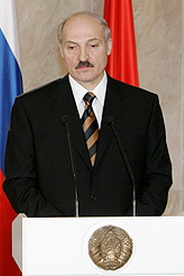
    Alexander Lukashenko from wiki

    Recently the Swedish Minister of Justice, Beatrice Ask, got a request from Alexander Lukashenko, where he asks her to start an exchange project, where Belarus government can learn more about how to reduce economic crime on Internet. I am however sure that this is not Alexander Lukashenko real intentions. Sweden did more than a year introduce the FRA law, that actually gives a certain department the right to track and read all emails and sms’ that crosses the border. The idea is to try to track down terrorists, which of course is complete nonsense. Sweden has a long tradition of tracking its own citizens. (It is no wonder we are the land of accurate statistics on all the moves the citizens takes.) Many in the Swedish piracy movement interpets this as a new way to violate human rights in Sweden (and other countries), and also because FRA can sell the information to anybody they want to!

    I am pretty sure Alexander Lukashenko understand how the Swedish government can use all the information they track from the email and sms’ that crosses the border. (To be clear: all emails in Sweden cross the borders. Servers have a very unpatriotic style and don’t really care which server it communicates with, inside or outside Sweden, the server never care.)

    It is however very easy for me to be ironic, sitting here in a country with freedom of speech, but I am really worried that this interest of Alexander Lukashenko in Internet, is more and more threatening all activity on Internet in Belarus. And outside the borders! I think it is high time that we, the blogging swarm that wants to help the citizens of Belarus to get freedom of speech and a free internet, to speaks up! At least I will do all in my power to try to high light all this crimes against human rights!


  • If he hits you he loves you

    If he hits you he loves you

    Publicerad:

    Läsningstid: 4 minuter

    On International Women’s Day viewpoint-east.org focus in an very important question concerning gender equality and human rights! The essay is written by Maria Nilsson, that has written two other articles on viewpoint-east.org before, read them here or here.

    I was in the beginning of my twenties and this was only my second visit to the countries called the former Soviet Union. My first visit to Ukraine had resulted in an instant love with everything from the people to the Soviet architecture so when I was admitted to a summer course hosted by a Swedish agency I was more than pleased. Sitting in the, despite the summer temperature outside, cold classroom and listening to a lady with the title Head of the Social Department in the city, I was a little bit less pleased and a little bit more annoyed.

    To start with not by the lecture but by my fellow Swedish “classmates” behaviour the last few days. I was the youngest in this course and by everyone’s standards by far the most boring. It appeared that this course was nothing but an opportunity for middle aged (and probably middle life crizing) Swedes to excess in cheap vodka drinking and flirtations. The dead serious “20-something Russian language student” was not their idea of a fun crowd. Therefore my attention was not directed to the comparatively ordinary very Russian looking woman giving the lecture until she uttered the sentence that I will never forget and that has come to follow me in life “If he hits you he loves you”.


    photo: sophie engström
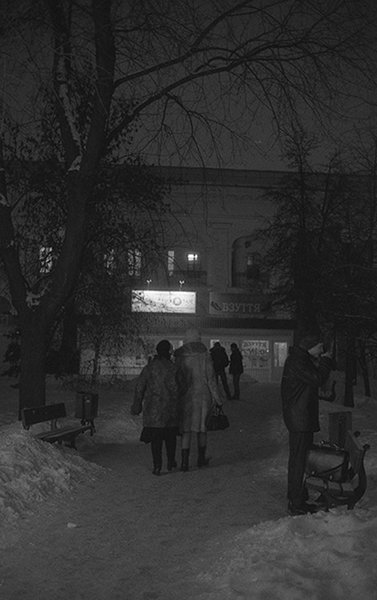
    Kyiv, Podil, Feb 2010

    As I remember it the lady made this remark upon a question from the audience on how the authorities is battling the high instances of domestic abuse in this country. At that time I was not fluent in Russian and had to wait for the translator until the full meaning of this remark came over me. “If he hits you he loves you”. If this was the official view on the domestic violence I will never know, but as I have come to travel to and live more in the former Soviet union I have realized that domestic violence is not something you address openly at any level.

    Several years later, and following the knowledge of working in a women’s rights organisation for a few years, I now strongly believe in the notion of gender based violence being sedimented in the same structures regardless of its occurrence in the middle class Swedish family, the illiterate couple in Africa, a family from Middle East or somewhere in the former Soviet union. It is a question of power and the fact that women are considered by societal structures to be subordinate men. Hence the way in which this problem is addressed by society is determining the ability of preventive measures and support system of the abused women. If society in general shares the idea of “if he hits you he loves you” then there is indication that the problem of domestic violence is considered to be exactly a domestic problem, where the authorities have no mandate to interfere and problems occurring in this sphere should also be resolved within the private walls of the home.

    Travelling and living in the former Soviet Union I have come to realise two things; there are very few women’s shelter outside of the big cities and secondly, many women blame themselves for being abused as well consider the husband or boyfriend to be the “real” victim. In example “I did not make him proper supper”, “He can’t handle not having a job”, although the latter is not different comparing to other contexts.

    I have met women behind the phrase “if the hits you he loves you” and I don’t think that Elena after being repeatedly abused by her alcoholic husband and after which he in a drunken moment threw her little girl off the balcony, would ever consider this phrase to be correct. Her bruises both inside and outside will never permanently go away. The husband was not even sentence to jail. Elena herself did not believe that she deserved anything else and found herself in yet another abusive relationship believing that her life was over long before it should be

    Discussing gender in development cooperation and foreign relations is often about gender mainstreaming and so called gender perspective. The question is if this is enough? More attention must be paid to domestic violence and start treating it as it is – a violation against human rights.


Archives: