
Category: movies

  • A Missing Gaze

    A Missing Gaze

    Läsningstid: 3 minuter

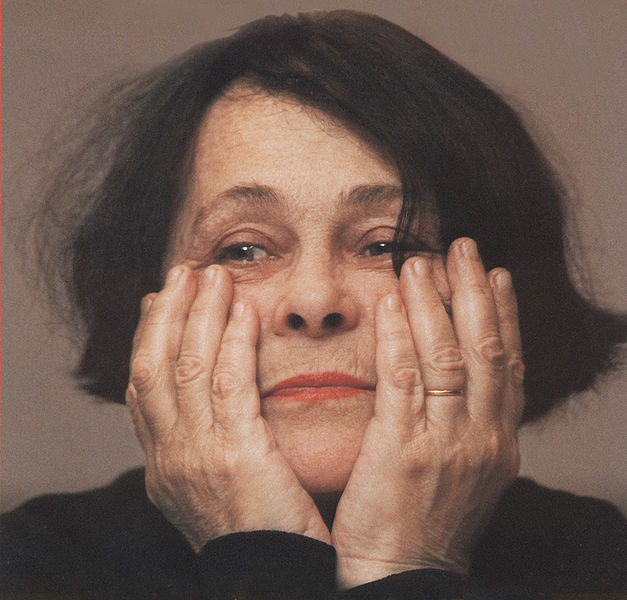
    Melody for a Street Organ (2009) by Kira Muratova compensates for the 20 years-long absence of social cinema in Ukraine in a strikingly unexpected way. To capture the social reality of Ukrainian society is not an easy task, since, like any other post-Soviet society, it avoids a direct look at its basic manifestations (like marginalization of large social segments and dissolution of interpersonal links) by rendering them invisible for the mass media apparatuses. In order to assemble the mosaic of unrepresented society, Muratova has chosen the vantage point that is generally repressed in contemporary Ukraine. Her latest film is set in public spaces where taking pictures is usually prohibited for reasons that are neither explained nor questioned, in spite of availability of those spaces for the general public: the train station and the supermarket.

    The first part of the film follows a couple of homeless kids through a railway station, where they are confronted with a series of unfavourable circumstances, while the second part takes them to a supermarket, where the penniless protagonists, hallucinating from hunger, are trying to get some food. Still, those areas – the railway station and the supermarket – are only seemingly excluded from democratic representation, since they are subjected to numerous surveillance apparatuses that not only passively collect information but also actively constitute the social relations at the observed territory, producing the subjectivities of those under surveillance. By entering this domain of monopolized representation with her camera, Muratova gets an opportunity to spy at the members of contemporary society reduced to their purely functional, mechanical identities – those of the train passengers or supermarket clients.

    This reduction is obvious in numerous film scenes where the kids appeal to occasional strangers with a cry for help only to get a standardized, artificial, ‘cinematic’ reaction from the people who cannot transcend their prescribed social roles. In a crucial episode of the film, the kids occasionally witness the extrinsic child beggar telling their own numerously repeated story verbatim to a stranger and getting a generous reward. The shock that children experience in the course of the scene is quite similar to a shock of the viewer confronted with Muratova’s numerous episodic characters that despite of their constructed, unnatural behaviour (or, maybe, precisely owing to these features) are strikingly recognizable in their representation of post-Soviet social identities. Rather than reproduce “reality as it is”, Muratova focuses on fiction underlying the reality itself, a fiction that is deconstructed from an ‘impossible’ viewpoint of the camera sneaking after the people who unconsciously perform their prescribed identities.

    Oleksiy Radynski is an essayist, editor and scholar of film theory. He is a postgraduate student at the National University of Kyiv-Mohyla Academy and collaborator at Visual Culture Research Center at the same university.

  • Boris Ryzhy – The unwilling survivor

    Läsningstid: 5 minuter

    How do you describe a suicide, what it implies in loses and sorrow for people close to you? How do you describe the devastating emptiness and hopelessness that the survivors need to live with? I would say that in many aspects it is not possible, but if you have an interest in understanding, without exploiting, there are a possibility that you will be able to describe both the cruelty in being left behind, and how survivors find their way out from the labyrinth of sorrow.

    In the documentary Boris Ryzhy, about the poet with the same name, made by the dutch filmmaker Aliona van der Horst, you can actually feel the sorrow in your own breath while watching it. van der Horst has managed to find the special situations, when words has no use and life itself seems to be more grim than ever.

    In the introduction we see a woman wondering around in a suburn district. She is trying to get a hold on somebody that knew Boris Ryzhy. After being reprimanded by a babushka, she finally finds somebody that wants to help her and let her enter a staircase in one of the houses. The woman explains that she and her brother lived in this house when they were small. She starts to ring the door bell to the first flat in the house. She does not present herself to the lady that opens the door, but tells her about the film that Ailona van der Horst is making. She says it is a film about her brother, the poet Boris Ryzhy. She asks the old lady if she remember him, and the old lady does not remember him. The woman, the sister of Ryzhy, starts to recite a poem that Boris Ryzhy wrote, but her voice cracks, and finally she starts to cry. The woman that opened the door starts immediately to ask her about why she is crying: “Is he dead? What happened to your brother?” she asks. “He is dead. He committed suicide”, answers the sister. I believe most spectators literary can feels the pain in her voice.


    The trailer for the documentary by Boris Ryzhy by Aliona van der Horst.

    The documentary then continues with, as it seems, an endless desire to try to understand why Boris Ryzhy decided to end his own life. Was it because many of his friends died already? Was it because he and all his friends lived in a violent world, with gangsters that lacked empathy for suffering? Did he feel alienated or was he just a mad genius that took suicide as a desperate wish to be accepted as a poet? Aliona van der Horst investigate and gets self-disclosure and fearless help from Boris Ryzhy’s family – the wife, son, sister and mother. But even so, she never comes close to explain why, except that it is necessary to accept the unacceptable. The death of somebody you love. This is however not a failure by van der Horst, but actually a strength to a story, that could have became extremely pathetic if it was made in a less intelligent way. To tell the truth, this is actually one of the best documentaries I have ever seen, and I have seen quite a few.

    null

    Boris Ryzhy, born in 1974, grow up in Yekaterinburg. His family was well-educated family and his father was a geologist, unknown what his mother did, though. When he was rather small his family moved to a rough area in Yekaterinburg. There Boris had to learn how to survive in the tough environment. He started to boxing in the same age as writing poems (14 years old) and violence and poetry seems to be utterly connected for him. Boris Ryzhy’s poems often depict and describe the neighbourhood that he and his sister grow up in. It seems like he never left the area in his soul. One of his very old friends, that Aliona van der Horst managed to track down, describes Boris as rootless and very lonely man, even though so many loved him.

    Boris Ryzhy committed suicide by hanging in May 2001, 26 years old. It is impossible to tell how his talent would develop, because his poems mostly describe the Jelstin years during 1990s. How crime and gangesters are more usual than ordinary jobs and loving and caring situations. Even so, Boris Ryzhy was not a gangster all though, but was also a PhD in Geophysics.


    The poem “Show me, Gypsy woman” read by Boris Ryzhy.

    In the documentary it is perhaps Boris Ryzhy’s wife that says the most devastating words. She tells about her and Boris childhood, how they were encouraged to believe in the communist future, and they thought they lived in the perfect socialist society. But when they finish school in 1991, the Soviet Empire fell apart. It didn’t come as any surprise for them, but after the fall of the empire, the “first generation of perestroika” was abandoned by the society itself. The only way that far too many saw, was the road of criminality. “We are the generation of body guards”, she says when she stands at Boris grave at the cemetery, and around her we see hundreds of graves for young men born in the beginning of 70s that dead in the mid 90s.

    It is obvious that Boris Ryzhy felt as a survivor, and to survive in this “war”, like one of his friends remarks in the documentary, is “a shameful business”. We can only hope that Boris Ryzhy’s legacy will survive, because his poems is not only violent but alos beautiful. And they are a legacy from a time that we all must try to prevent to return.

    If you want to read Boris Ryzhy in English you can find some here.

  • Border – Nagorno Karabach 15 Years Later

    Border – Nagorno Karabach 15 Years Later

    Läsningstid: 5 minuter

    Maria Nilsson has seen the movie Border by the Armenian director Harutyun Khachatryan.

    In the beginning of February the award winning Armenian director Harutyun Khachatryans movie “Border” was shown on the Gothenburg Film festival. Border is set against the mountains of South Caucasus and the unresolved conflict between Armenia and Azerbaijan over the region of Nagorno Karabach in the south Caucasian mountains. This war stricken parts of the world has suffered greatly the last twenty years. In the centre of attention in this very slow and scarsly spoken movie is a small mountain village and its inhabitants. The camera is slowly capturing the change of season while the conflict is continuously present in the shape of barbed wire and sirens surpassing all other noises.

    The conflict
    The war in Nagorno Karabach was yet another war that broke out in the aftermath of the fall of the Soviet Union over territories that was close to impossible to pronounce for Western journalists. The war in Nagorno Karabach would however prove to be unusually bloody and drawn out. Between 1991 and 1994 over 35000 is believed to have been killed in the fighting’s and many times more were forced to leave their homes. The background of the conflict is found in historical antagonism, Stalin’s power play and the control vacuum opening after the dissolution of Soviet Union. Nagorno Karabach with an Armenian majority was 1921 by a direct decision from Stalin transferred from the Armenian SSR to the Azerbaijan SSK and consequently during the following years a large number of Azeris settled in the Nagorno Karabach area. During the highpoint of glasnost and perestroika the local parliament of Nagorno Karabach voted for the region to be transferred to the Armenian SSR which was highly opposed by Moscow, a resistance that was keep until the fall of the Soviet Union.


    Photo: Maria Nilsson

    The independent Nagorno Karabach
    Nagorno Karabach republic (NKR) or Mountainous Karabach as the area is also called, declared itself independent in 1994, the same year as the cease fire was brokered. Today the region is not recognized by any other state but still keeps its own parliament, president, currency the cease fire is still only a cease fire and retained by the several thousands of soldiers on both sides of the barb wires. Nagorno Karabach would not survive with out the economical, military and societal support from Armenia and the ties between the two are strong although combined with a sense of a distant and occasionally problematic and stubborn relative. The first decade of alleged independence have not been an easy path for Nagorno Karabach. Not unlike similar regions for example Transnistrien (Moldova), Adjarien (Georgia) the declared independence has brought with it a corrupt, sometimes straight out criminal, domestic politics.

    Travelling in Nagorno Karabach means travelling through the landscape that H Khachatryans so precisely paints in the movie Border. The narrow road after turning left on the main road leading from Yerevan to Iran is ironically called a highway but could easily be taken for a village road. Climbing up the Caucasian mountains and further into the Nagorno Karabach area it is difficult to understand how two cars could ever meet. The incredible Caucasian mountain that has not only proven to be highly accommodating for beyond cruel guerrilla wars but also creates one of the most inaccessible areas in the region. The first impression of the landscape and reappearing in the movie is the lack of visible human lives and the breathtaking sights. Houses are randomly placed down the slopes of the mountains, coming closer it is visible that only a fraction of the houses are occupied while the majority of them still appears to have been left in a hurry under fire of hostile troops and often with snipers holes left on the house shells. Judging from the reconstruction process the cease fire could have taken place fifteen days ago, not fifteen years ago.


    Photo: Maria Nilsson

    As in any war stricken society there are instances coming across as oddly out of place. In Nagorno Karabach it is the BMW cars trafficking the road in sharp contrast to the ladas and muscovite, the giant football stadium right in the centre of the city and the village Vank located a few miles outside of the main city Stepanakert. Vank contained as many others villages a mixed Armenian and Azeri population before the war but in the ethnical cleansing during the war all Azeris left the villages. A now Russian based oligarch was born in the village of Vank and has donated large sum of money to the reconstruction of the school which now must the only school in Nagorno Karabach with an adjoining swimming pool.

    The slow moving film border capture both the harsh living conditions for the inhabitants left to the mercy and ever changing conditions of nature. It is cold, it is raw, it is tough and transfers a sense that the people are too preoccupied mere surviving to shed any time on unnecessary small talk. Ending with a devastating fire on the eve of a young couples wedding the movie communicate a message of hopelessness and resignation transcending from the unresolved conflict where the lack of permanent peace agreement is preventing financial and societal improvements. Until this can be accomplished the next fifteen years appear to be following the same track as the preceding fifteen.


    Film stills from the movie Border.

    You can also read a review of the movie Boarder at Kinokultura.

  • Gothenburg’s Film Festival 2010 – without viewpoint-east

    Läsningstid: 2 minuter

    Gothenburg’s International Filmfestival will soon begin, from 29th of january to 9th of February. I will however not be in town since I will visit Kyiv instead to collect material and ideas for new articles for viewpoint-east and hopefully other journals/newspapers.

    filmfestival

    The annual filmfestival in Gothenburg is however one of the few events I really appreciate, so it could sound strange that I have decided to leave the city right during those days. But it is a matter of priorities and Kyiv won my mind battle this time. (I will however not focus that much on the Presidential election, but rather to take this as an opportunity to highlight other issues.)

    Firstly, there are not even ONE Ukrainian movie this year in the programme, which is is a great disappointment. I thought we would at least find one, or to be more precise (and please DO correct me of I am wrong) that Las Meninas would be in the programme. It has never been shown in Sweden or at the festival. That is a movie that at least I would like to see.

    Much more pleasing is that the festival has three movies from Georgia and at least five Russian movies. I am especially sad that I miss Russia 88 and Help Gone Mad. Help Gone Mad is probably a wonderful movie. I really enjoyed Boris Khlebnikov other movies (and especially “Free floating”).

    There are two movies from Estonia, and among them Disco & Atomic War triggers my interest. That is also the only movie I have among my own resources and will watch as soon as possible.

    And last and not the least, I am very sad I miss all four movies from Armenia, and then especially Border, which seems to be a very interesting documentary with a new approach. I do hope I will have the possibility to watch it in a not too distant future.

    Border

    ps. and don’t forget to check out the blog!

  • A forgotten masterpiece

    Läsningstid: 2 minuter

    The movie “The Eve of Ivan Kupala” is perhaps one of the most intrigues movies I have ever seen. The movie is based on Nikolai Gogol’s short story “The Eve of Ivan Kupala” (or “S:t John’s Eve” in translation). I did read the short story by Gogol a couple of years ago, but can’t say my imagination was able to create anything like this movie. The director, Yuri Ilyenko, has made a very independent interpretation of Petro’s pact with the devil, or what is thought to be the devil.


    Petro’s meeting with the devil at Bear’s Ravine

    The story is, as I told above, based on a short story by Gogol. Gogol has in his turn interpreted and collected Ukrainian folk tales. The story circles about the poor peasant Petro that falls in love with Pidorka. She is much richer than Petro, and her father disagree to their love. Finially her father forbid him to ever see her again, and Petro tries to make everything in his power to see her. He gets so desperate that he makes a pact with a stranger in town, that possibly could be seen as the devil. To make a long story very short, Petro agrees to blood shred in order to get the gold so he can get his Pidorka back. After protests he agrees to kill the child, in order to get the gold. Petro wakes up after two days Petro, unable to reember how he got the money.

    Yuri Ilyenko has created a nonlinear masterpiece, with very little dialogue. He has left a lot of space for your own imagination and interpretation. But the fact that it isn’t easy to follow only makes the narration more complex and intrigues.

    The movie was made in 1968 but wasn’t released until 1989. I believe it could be because the spoken language is Ukrainian, which was rather controversial to use in Soviet days. If anyone can fill me in why this movie was “forgotten” about for so long, I would be more than thankful. I can’t find much info about the movie, even though I have been looking almost everywhere.