
During my stay in Moscow last month, I one night ended up looking at Russian TV at a friends places. My friend and her old mother was zapping through the channels and ending up at the news. While we was sitting there consuming the information (or whatever the TV viewer are expected to do) I started to feel physically sick. Since I never look at TV in Sweden I am probably rather sensitive towards what I see. At first I thought it was because I had too much tasty food to eat, but rather quick I understood it was the news in the box infront of me that was the course of my sickness. And why did I feel like that? Well, it was not the actual news. They look the same as they always have in Russia, so this did not upset me (enough, I should add).
No, it was an other unpleasant aftertaste I could feel. During the 30 minutes or 45 minutes news show there where not even one woman speaking. I could see women crying or walking in the background of some guy being interviewed, but not even one woman had a voice. Coming from a country where the newsrooms and editorial work have, may be not great, but at least an awareness how important representation and diversity actually are, I felt like I was pushed back to some kind of Medieval landscape just in one blow. It is true that women’s representation in Russia in, for instance, the Parliament, sucks but this was just too much! (Check the statistics at Wikigender.) And I might alos add that this is a rather unpleasant change since all my previous stays in Moscow and Russia. I felt an urge to talk to a feminist that could put some light on how it became like this.
I was lucky. The day after I had a meeting with one of the most prominent feminists in Moscow, Nadezhda Azhgikhina, journalist, literary critic, and executive secretary at Russian Union of Journalists. I asked her why women have vanished from Russian TV and why I can’t hear or read any protests. Nadezhda implies that most bosses or executive bosses are men, so basically the newsrooms or editorial are stuck with those. But when it comes to why TV news shows almost no women Nadezhda has a very interesting theory. She denotes that Russian TV should be regarded a theatre play. This play has as a purpose in trying to fool the viewer into believing that the government actually is in charge and can handle all occurring problems in the society.
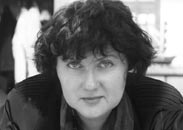
Nadezhda Azhgikhina
– Men doesn’t show fear and are therefor regarded as the most effective power. So by excluding all women, they try create the picture that Russia is the strongest and best country in the world.
The second part of her theory is that she implies that TV, including all other media, do not want to promote the idea that there exists any gender problems in Russia of today. One explanation could be that it just don’t sell. The younger generations have not interest in feminism or gender issues, basically because they do not want to be influenced by “old” values. By “old” she denotes feminist values from 1990’s and during the Post Soviet Era. The feminist movement back then was very strong, but has drastically declined and today there are almost no feminist movement, she implies.
However, during the 90’s the feminist movement managed to create a good and stable network among those that are working with the questions.
But even so, I urge, while looking at Russia today I can only see stagnated stereotypes and mostly values promoting, for example, macho-masculinities and sticky sexisms when it comes to feminities. From my perspective Russia gender situation appears to be more conservative and obsolete than ever. I point at Ukraine and FEMEN and ask Nadezdha why we can’t see any reactions like that in Russia. Her answer actually surprises me. She claims that Ukraine is 10 years behind Russia., and that Ukraine’s radical feminist movement will also languish away. Her rather fatalistic attitude scares me, however she can be right. In Sweden we have had several strong feministic movements that have subsided. While Russia had a strong feminist during the 90’s, Sweden and many other countries, for instance USA, had a rather heavy backlash on feminists issues. From some perspective I would say that Sweden has never really recovered from that backlash.

FEMEN dressed as policemen protesting against the limitation of democratic liberties and freedom of the press during the first hundred days of Viktor Yanukovych’s presidency commemorated today.
The question we should ask ourself is perhaps how feminism can survive between every intervals of activity. What will for instance happen with an organization such as FEMEN when Ukrainian media has lost their interest in them? What plans do they have to survive the situation? After my meeting with Nadezdha I strongly feel that this is perhaps one of the weakest points of all feminist movements around the world. (And all other activism, I suppose.) When media turns their heads in other directions, too many feminists activists vanishes from the scene. How come? Not all feminists are exhibitionists for sure!!
But hopefully social media could play an important and different role for making campaigns to survive longer. FEMEN has been able to create their own media flow, with twitter, flickr etc etc. And I do hope that they have the strength to go on, even after the Ukrainian establishment has recovered from the chock that FEMEN (still) creates.

From FEMEN’s last campaign “Bloody tits”
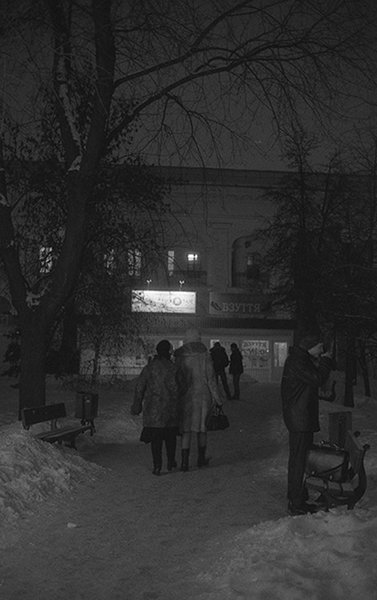






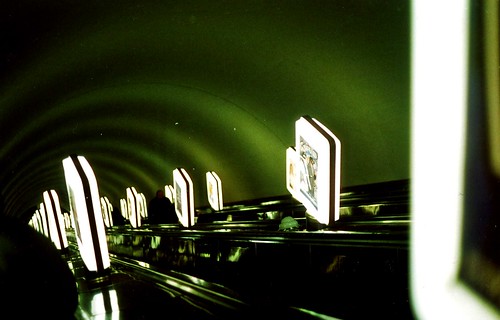

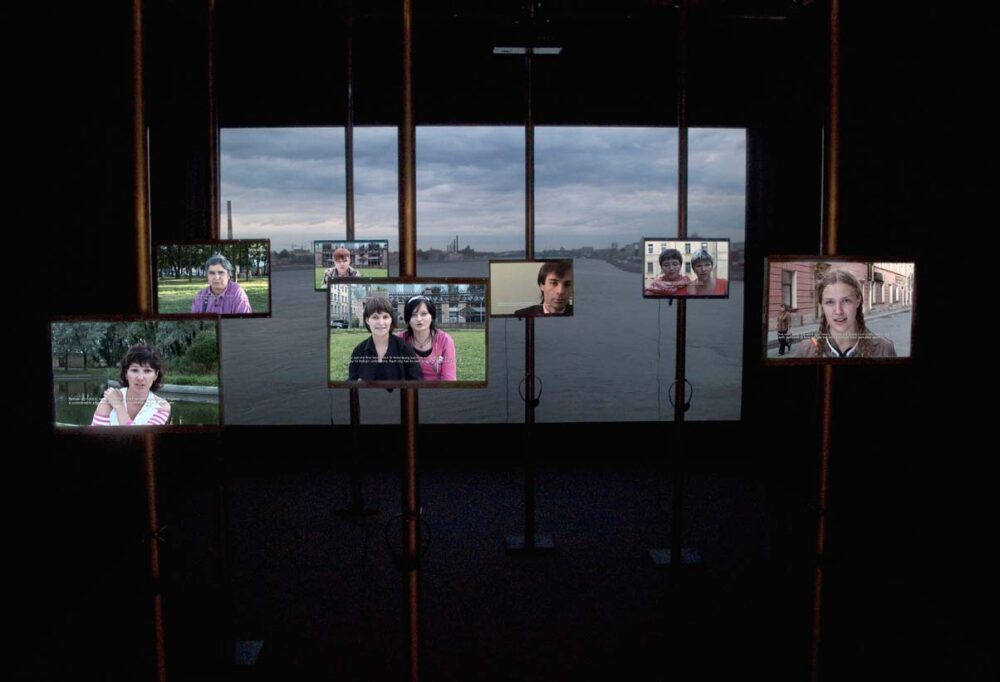
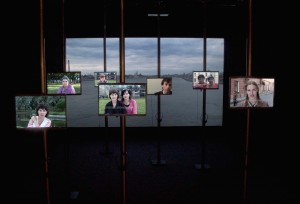 State of Mind consolidates to a trilogy together with Resonance and Code of Silence. In different ways these lens-based art installations cast light on aspects of socially and culturally constructed identity-based groups in contemporary society. Photography and video are used in combination to expand on the separate histories of the two media with regard to interviews and portraits in documentary genres. This is the point of departure for all three installations. As for the overall narrative, the topics of how and why different groupings construct networks and communities in order to achieve a sense of belonging are in focus, as well as the conditions and necessities for forming the community. The projects look at the social conventions family, love and career, dealing with power relations such as gender, ethnicity, sexual orientation and class. The method of collecting the material in fieldwork is similar in the three projects, but the questions asked and issues raised are specific to each segment of the installations. Portraiture and personally based stories are central. The trilogy is presented as three separate art installations, which co-exist and cross-inform each other. They reflect upon civil rights issues and the idea of being safe and productive within society, working in the space between personal choice and social expectations. Memory, narration, visual representation and oral history are central. In each of the three works a different group is approached that relates to the artists’ personal lives. Resonance [Resonance was exhibited at Norrköping Art Museum, Göteborgs Konsthall and Uppsala Museum of Art during 2006-2007.], our first collaboration, is based on a network of peers belonging to a successful generation of artists and curators. They are all women who made an entrance onto the Swedish and Danish art scene in the 1990´s, and now have international careers. On one level Resonance is an examination of the Scandinavian welfare state, and in more specific terms, the impact of the conditions it creates for the portrayed women to make it on the art scene. In Code of Silence [Code of Silence will be ready to be launched in 2009.] this is a sibling group of five who grew up on a small farm in rural Gothenburg, Sweden. The farm had to face the challenge of major cultural reforms in the nineteenth century, but remained intact. It became a target for expropriation during the 1950´s and 70´s to make way for the reforms involved in building the modern Sweden. Hence, it remained an object of possible interest for the national cultural heritage. The farm was finally demolished in 2004. Code of Silence is based on oral history, memories told by the siblings infringing the UN’s Declaration of Human Rights paragraph 17 relating to everyone’s right to a home. In addition this installation includes a large number of private and official documents such as hand-written wills, receipts from selling milk, and letters to the King of Sweden. State of Mind explores everyday life and the boundaries between ethics, legislation, prejudice and civic expectations in the LGBTQ [Lesbian, Gay, Bisexual, Transsexual, Queer] life of St. Petersburg, Russia. It emphasizes individuals identifying as lesbians or bisexual women.